North Texas homes are built for hundred-degree summers, not fifteen-degree mornings, and every few winters we all get reminded of that the hard way. When a hard freeze rolls through Forney and East Dallas, frozen pipes and struggling heating systems arrive together. Here’s how to see trouble coming, what to do in the moment, and how your heating system fits into keeping your plumbing alive.
Why Texas homes freeze differently
In colder states, plumbing lives deep inside insulated walls because it has to. Here, water lines routinely run through exterior walls, unconditioned attics and garages: fine for 98% of the year, vulnerable in a real freeze. February 2021 taught the whole region how quickly “rarely a problem” becomes “everyone’s problem.” The physics are simple: water expands roughly nine percent when it freezes, and a pipe full of expanding ice has nowhere to send that pressure except through its own walls.
The warning signs
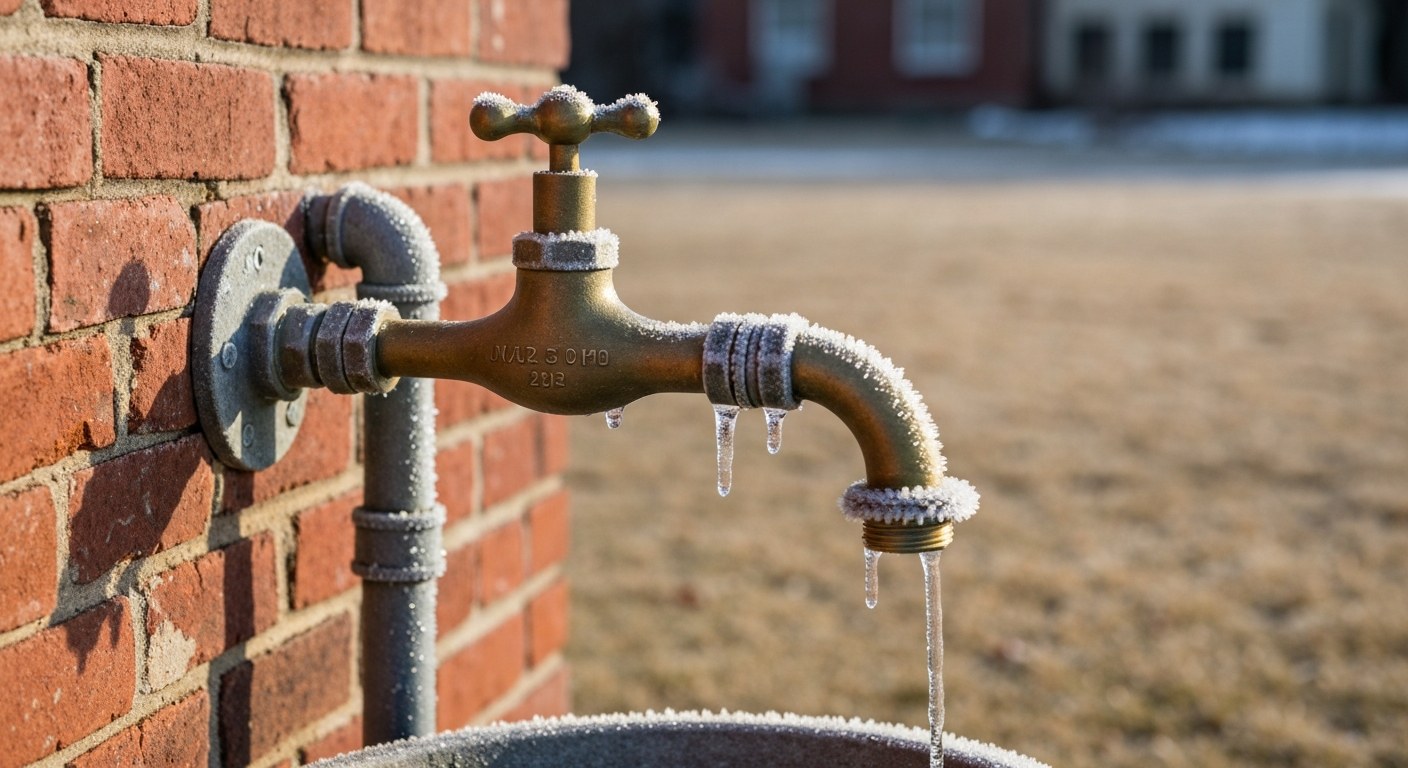
A faucet that slows to a trickle during a freeze is the loudest alarm you’ll get. Visible frost on exposed pipe, a spigot that produces nothing, or an odd smell from a drain (a frozen section can block sewer venting) all point the same direction. The trickle stage is the window: the pipe is icing but likely hasn’t split yet.
What to do, and what never to do
Open the affected faucet so melting ice has somewhere to relieve pressure. Warm the pipe gently and gradually (a hair dryer, a space heater in the room, warm towels), working from the faucet end back. Open cabinet doors so household heat reaches under-sink plumbing. What never to do: any open flame. Every winter, well-intentioned blowtorches cause house fires and split pipes by boiling water inside a sealed section. And if a pipe has already burst, the water main shutoff, not the repair, is the first move. Know where yours is before you need it.
Prevention is cheap
Before a forecast freeze: drip the faucets on exterior walls (moving water resists freezing), open under-sink cabinets, disconnect garden hoses and cover outdoor spigots, keep the garage closed, and don’t set the thermostat back at night the way you might normally. Foam pipe insulation from any hardware store, installed on an afternoon, protects the attic and garage runs that freeze first.
Your heating system is your pipes’ bodyguard
Here’s the connection people miss: the single biggest thing protecting your plumbing during a freeze is a heating system that keeps running. A furnace that fails on the coldest night of the year turns a cold house into a plumbing event within hours. That’s the real argument for fall maintenance: the freeze is precisely when the system is working its hardest and when a marginal component is most likely to quit. If your heat does fail during a cold snap, call us. You’ll talk to the owner, and calling early gives you the best shot at same-day* furnace repair. Phones are answered until 9pm; evening callers get first pick of next-day slots. Our guide to common heating problems covers the warning signs worth acting on before the forecast turns.
Frequently Asked Questions
Need it done instead of explained?
This guide covers the what and why. Here’s who actually does it, same-day* when you call early.
Ask the owner
Reading is free. So is the second opinion.
On weekdays the phone rings Mario, the owner. Tell him what the system is doing; the answer is usually shorter than the article. After hours your details go straight to him and he follows up first thing.
* Same-day service depends on time of call, your location and schedule availability.