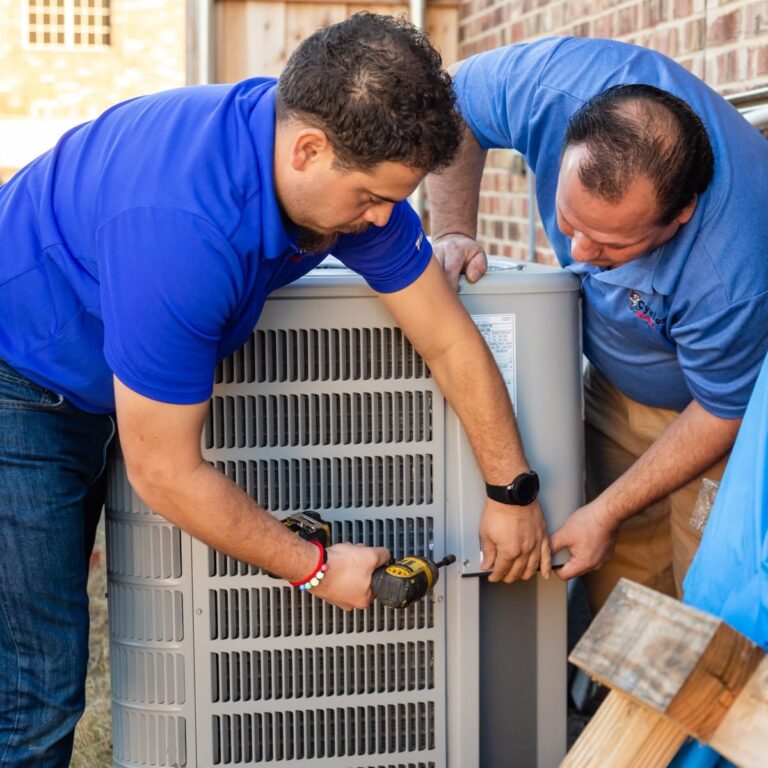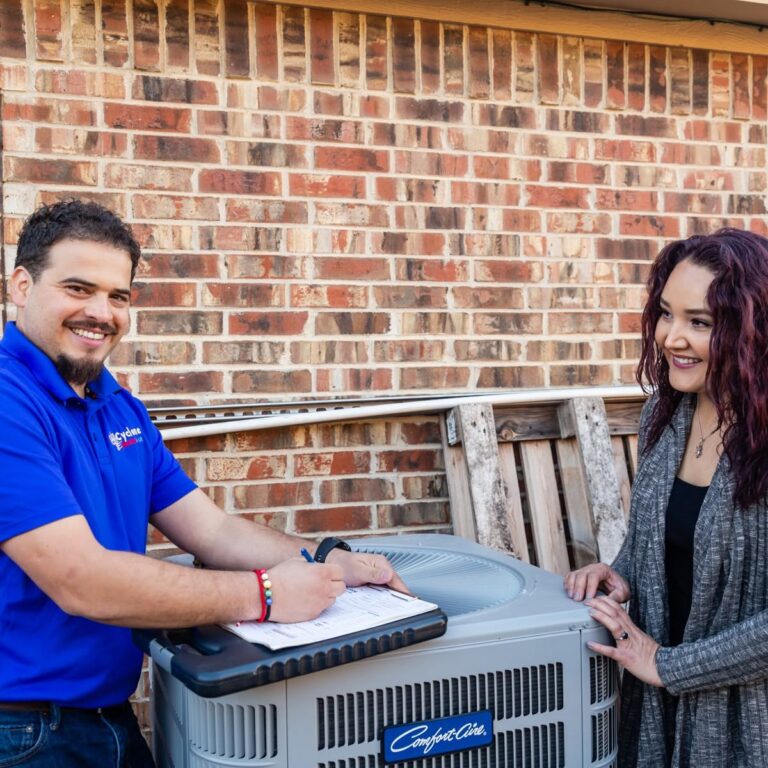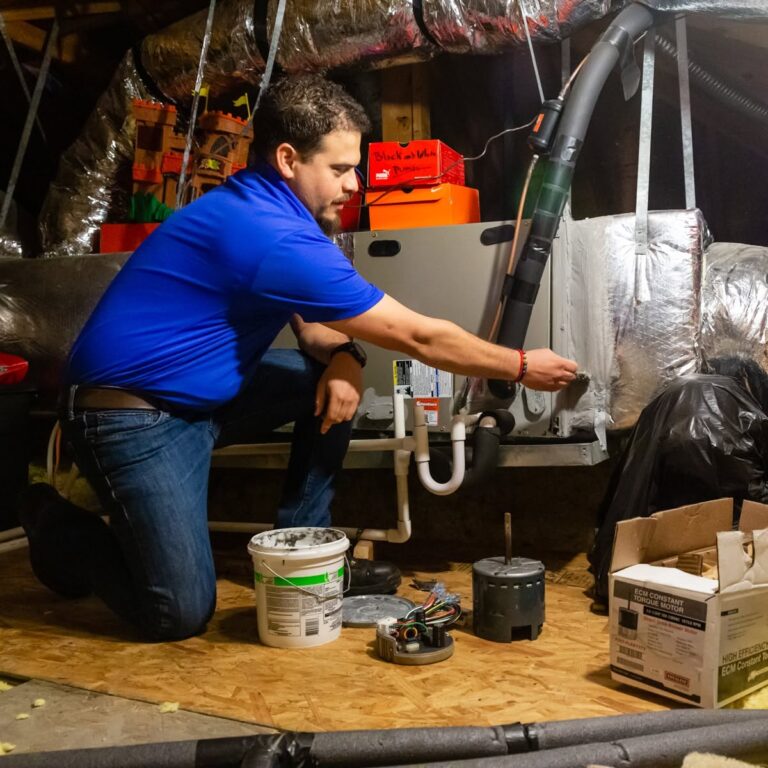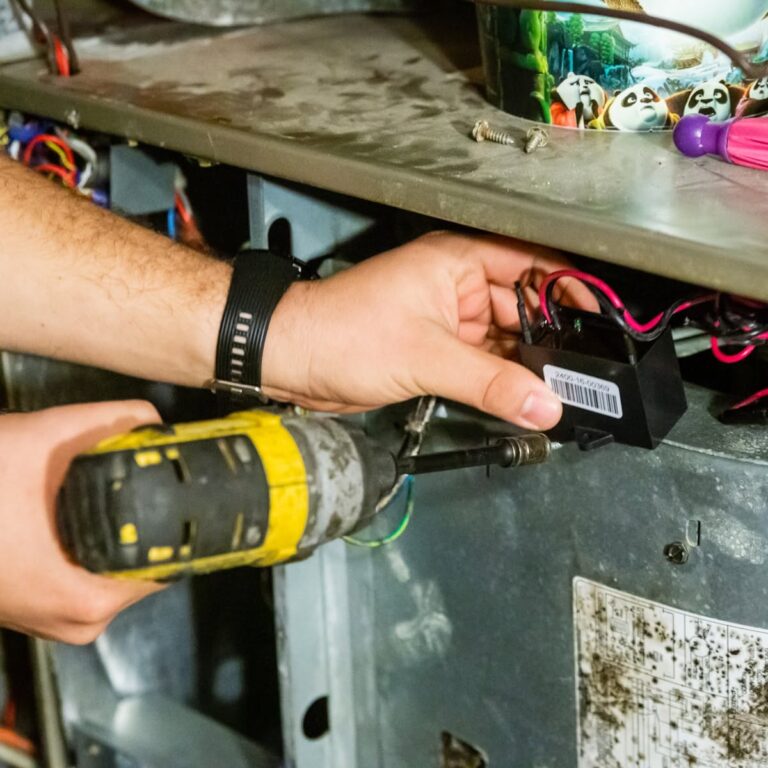
Every summer we stand in Forney and East Dallas backyards having the same conversation: the system is down again, the repair quote isn’t small, and the homeowner asks the only question that matters: do I fix it, or is it time? There’s a sales-pitch answer to that question and a math answer. Here’s the math.
Start with age
A central air conditioner in North Texas typically gives you somewhere in the range of 10 to 15 years. Our summers work equipment harder than most of the country’s, and maintenance history moves you up or down that range. A well-maintained ten-year-old system can be a solid repair candidate. A neglected fourteen-year-old system facing a major component failure usually isn’t. Age alone doesn’t decide it, but it sets the frame for everything else.
The multiplication rule of thumb
A common industry shorthand: multiply the repair quote by the system’s age in years. If the result rivals the cost of a new system, replacement usually wins. The logic is simple: a big repair on old equipment buys you the same old efficiency, the same worn siblings of the part that just failed, and a short runway before the next call. The same money toward a new system buys a warranty, modern efficiency, and a reset clock.
Repair frequency is data
One repair in five years is a system having a bad day. The third service call in two summers is a trend line. Pull up what you’ve spent on the system over the last couple of years and treat it like the data it is: money already going into the machine annually belongs in the comparison against a replacement payment.
The efficiency side of the ledger
Systems installed in the 2000s and early 2010s commonly carry efficiency ratings far below what today’s equipment delivers. Modern units are rated under the SEER2 standard, and the practical translation is straightforward: a new system does the same cooling with meaningfully less electricity, every hour it runs, and in a Texas summer it runs a lot of hours. Efficiency savings rarely justify replacing a working system on their own, but when a large repair is already on the table, they belong on the replacement side of the ledger. Choosing the right rating is its own topic: here’s our plain-English guide to energy-efficient ACs.
Two situations that tilt the answer
Toward repair: younger systems, minor components, first failures: capacitors, contactors, fan motors on a system with years left. Toward replacement: compressor failures out of warranty, significant refrigerant leaks on R-22 systems, and any major repair on equipment past the twelve-year mark. And one honest asterisk: if the ductwork or installation was the underlying problem, a shiny new unit inherits it, which is why our replacement process starts with an assessment, not an order form.
Get the second opinion. It’s free.
If another company has told you a repair can’t be done or that replacement is the only option, we’ll look for free and tell you what we actually see. Sometimes we confirm their diagnosis. More than once, a Forney homeowner has gotten years more service out of a system another outfit had written off. When you call Cyclone Heating and Air, you talk to the owner, and you get both numbers side by side with financing options if replacement wins. The decision stays yours.
What the math misses: comfort
Numbers decide most of it, but not all of it. If your current system has always struggled with humidity, uneven rooms or noise, a properly sized modern system fixes problems the repair-versus-replace spreadsheet never sees. Two-stage and variable-speed equipment in particular transforms sticky Texas evenings. It doesn’t change the math; it’s worth weighing alongside it.
Frequently Asked Questions
Need it done instead of explained?
This guide covers the what and why. Here’s who actually does it, same-day* when you call early.
Ask the owner
Reading is free. So is the second opinion.
On weekdays the phone rings Mario, the owner. Tell him what the system is doing; the answer is usually shorter than the article. After hours your details go straight to him and he follows up first thing.
* Same-day service depends on time of call, your location and schedule availability.