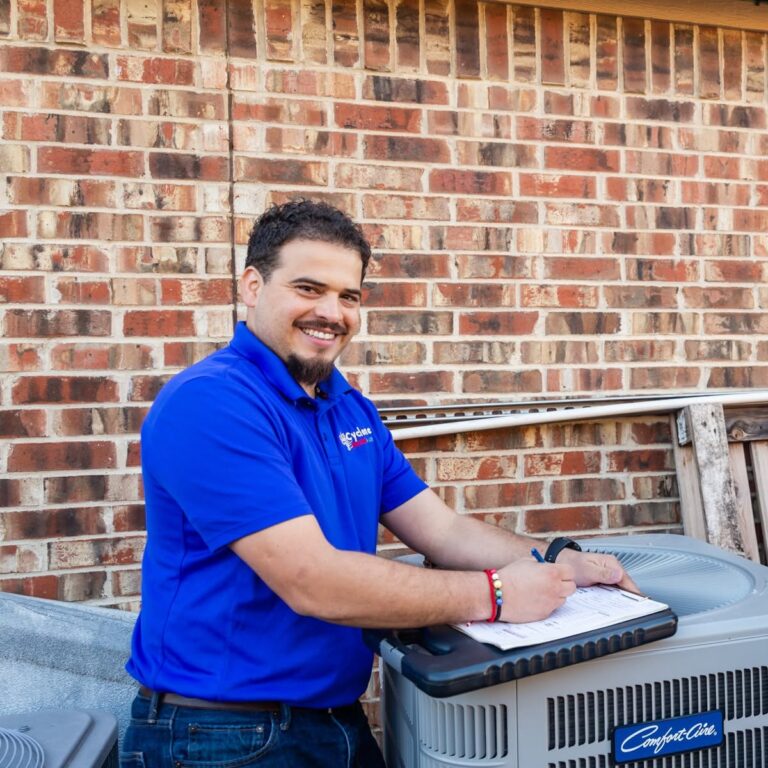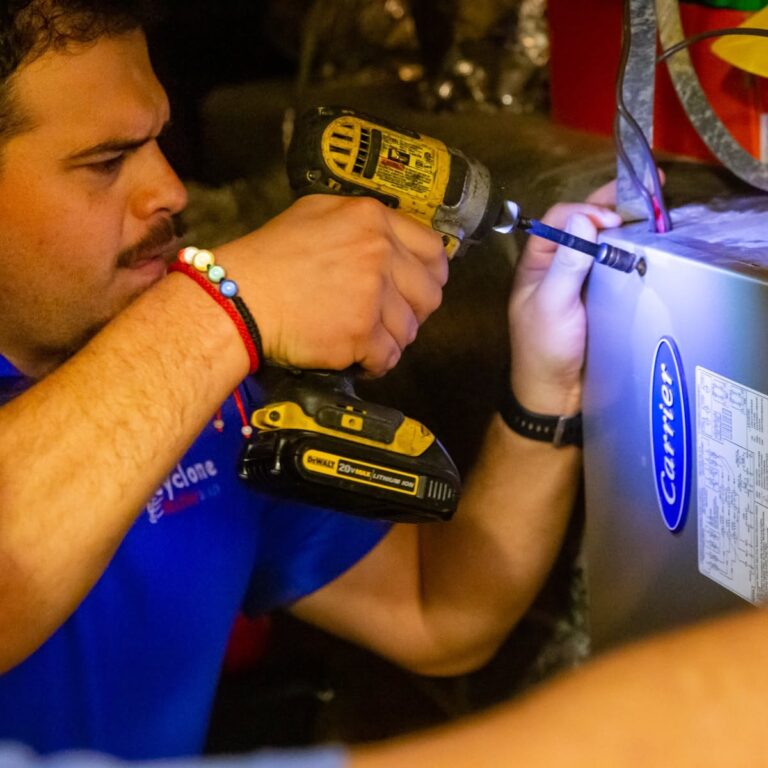
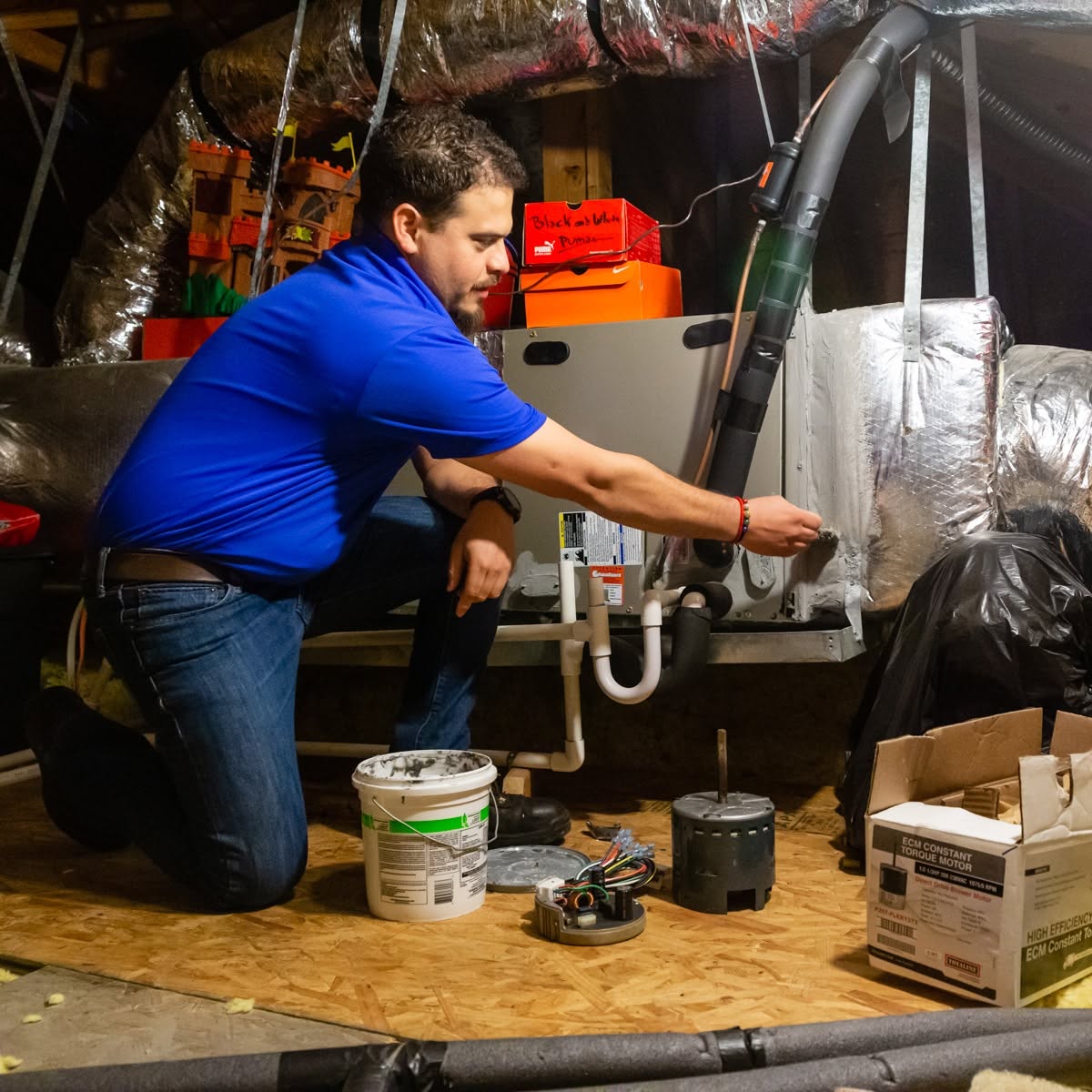
In North Texas, the furnace spends most of the year being ignored, and then gets asked to perform, flawlessly, on the one week we actually need it. A fall maintenance visit is how you make that arrangement work. Here’s what a real seasonal heating tune-up covers, what you can handle yourself, and why the timing matters more than most homeowners realize. (We run the same play for summer on the cooling side: here’s what an AC tune-up actually includes.)
Why fall, specifically
The first real cold snap generates a predictable wave of no-heat calls across Forney and East Dallas: systems that sat dormant for eight months all being switched on within the same 48 hours. Whatever weakened over the summer announces itself right then, when every HVAC company in the metroplex is at its busiest. A fall visit finds those weaknesses in October, on your schedule, instead of during the rush. An hour in the fall beats a cold night in January.
The heat exchanger: the part of the visit that matters most
On a gas furnace, the heat exchanger is the metal barrier between the burning gas and the air that circulates through your home. Years of heating and cooling cycles can eventually fatigue that metal, and a cracked heat exchanger can allow combustion gases, including carbon monoxide, where they don’t belong. This is not a common failure, and it’s not a reason for alarm; it IS the reason a proper inspection involves opening the furnace and looking, every season, without exception. It’s also why we’d rather you have a working CO detector near the bedrooms than take anyone’s word for anything.
The rest of the checklist
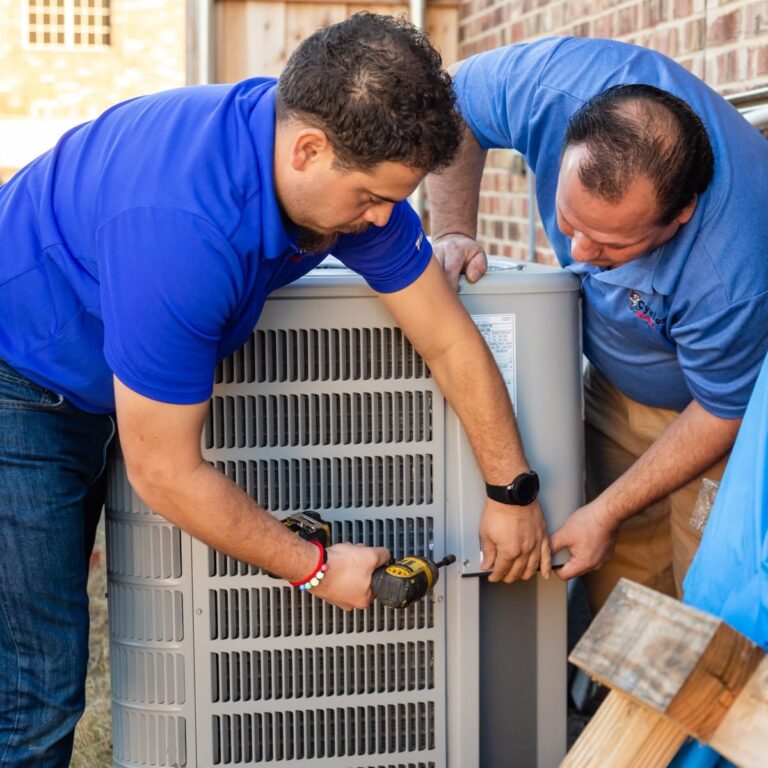
Beyond the heat exchanger: burners cleaned and checked for even, steady flame: lazy yellow flames tell a story blue ones don’t. The ignition system tested, because igniters and flame sensors cause a huge share of winter no-heat calls and cost little to address early. The blower inspected and the filter checked, since starved airflow makes every other component work harder. Gas connections checked, condensate drainage on high-efficiency furnaces cleared, thermostat operation verified end to end. If your home runs on a heat pump instead of gas, the checklist shifts (refrigerant readings, defrost cycle, backup heat strips), but the logic is identical: find the weak link before January does.
The part that’s yours
Between visits: change the filter on schedule, keep supply and return vents clear of furniture and rugs, put fresh batteries in the thermostat each fall, and keep the area around the furnace clear of storage. None of it requires tools, and all of it extends the good work a tune-up does.
Make it automatic
The easiest version of all of this is not thinking about it: our maintenance plan pairs the fall heating visit with the spring cooling visit, and plan members save up to $300 a year. Or book a single visit through our furnace and heating maintenance page. Either way, the goal is the same: a furnace that lights on the first cold night and stays boring all winter.
Frequently Asked Questions
Need it done instead of explained?
This guide covers the what and why. Here’s who actually does it, same-day* when you call early.
Ask the owner
Reading is free. So is the second opinion.
On weekdays the phone rings Mario, the owner. Tell him what the system is doing; the answer is usually shorter than the article. After hours your details go straight to him and he follows up first thing.
* Same-day service depends on time of call, your location and schedule availability.