There are few Texas-specific miseries quite like an air conditioner that runs all day and never catches up. The good news: most “AC not cooling” calls we take across Forney and East Dallas trace back to a short list of causes, and a few of them cost you nothing to check yourself. Here they are, roughly in order from the cheapest fix to the priciest, with honest guidance on where DIY ends and professional AC repair begins.
1. Thermostat settings and batteries
It sounds too simple, but it solves real calls: a thermostat switched to “fan” instead of “cool” moves air without cooling it, and dying batteries can drop the whole system offline. Check the mode, set the temperature five degrees below the room, and listen for the outdoor unit to kick on. If the display is blank or unresponsive, fresh batteries are the cheapest repair in this article.
2. A clogged air filter
A filter choked with dust strangles airflow. The system runs, the air moving through the vents feels weak and barely cool, and the equipment works far harder than it should. If you can’t remember the last time the filter was changed, that’s the answer: swap it and give the system an hour. In dusty North Texas summers, monthly checks are not overkill.
3. A tripped breaker or outdoor disconnect
The indoor blower and the outdoor condenser are usually on separate breakers. If the inside fan runs but the outdoor unit sits silent, check the breaker panel and the disconnect box mounted on the wall near the condenser. One warning worth taking seriously: a breaker that trips again after you reset it is telling you something is wrong electrically. Stop there and call. Repeated resets can turn a small repair into a big one.
4. A frozen evaporator coil
Weak airflow plus warm air plus a sweating or iced-over refrigerant line usually means the indoor coil has frozen into a block of ice. It’s counterintuitive (ice, in August), but it’s one of the most common things we find. Turn the system off and let it thaw (a few hours), then try again with a fresh filter. If it freezes a second time, the underlying cause is usually airflow or refrigerant, and that’s a diagnosis visit.
5. A clogged condensate drain line
Your AC pulls gallons of water out of Texas air every day, and it all leaves through one small drain line. When that line clogs with algae, many systems shut themselves down through a float switch to protect your ceiling. If your AC quits on the hottest afternoons and you see water in the drain pan, this is a likely suspect. Drain line cleaning is part of every proper AC maintenance visit for exactly this reason.
6. Low refrigerant (which means a leak)
If the system blows air that’s cool-ish but not cold, runs constantly, and the outdoor unit’s larger pipe isn’t cold to the touch, refrigerant is a prime suspect. Here’s the part many homeowners never get told: refrigerant doesn’t get used up. If you’re low, it leaked out, and the honest fix is finding the leak rather than topping off the charge every summer. We wrote a whole guide on that: Does your AC really need a refrigerant recharge?
7. A failing capacitor or compressor
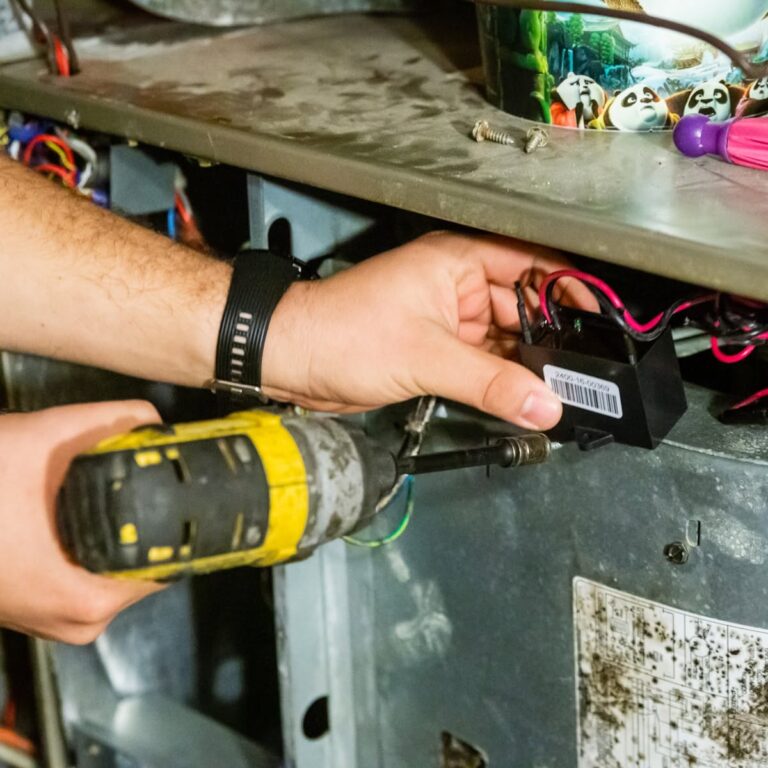
At the pricier end: the capacitor that starts the outdoor unit, and the compressor itself. A telltale capacitor symptom is the outdoor unit humming but not spinning, or clicking without starting. Capacitors are a common, quick repair. Compressors are the heart of the system and the most expensive component in it, which is why a compressor diagnosis is exactly the moment to slow down and look at the whole picture, including the repair-or-replace math on an aging system.
When to stop troubleshooting and call
Thermostat, filter, breaker: check those yourself and you’ll solve a meaningful share of no-cool situations for free. Beyond that, you’re into refrigerant circuits, electrical components and diagnosis equipment. When you call Cyclone Heating and Air, you talk to the owner, you get an honest diagnosis with an upfront quote before any work starts, and if you call early, same-day* service is often on the table. Phones are answered until 9pm; evening callers get first pick of next-day slots.
Frequently Asked Questions
Need it done instead of explained?
This guide covers the what and why. Here’s who actually does it, same-day* when you call early.
Ask the owner
Reading is free. So is the second opinion.
On weekdays the phone rings Mario, the owner. Tell him what the system is doing; the answer is usually shorter than the article. After hours your details go straight to him and he follows up first thing.
* Same-day service depends on time of call, your location and schedule availability.